
Description
A Barling "3107" tobacco pipe likely refers to a pipe produced during the Transition Era (late 1960s to mid-1962) or later, where the Barling family ceased exclusive control of production. While Barling is renowned for their "Family Era" (pre-1962) pipes stamped "Barling's Make," the 4-digit numbering system, especially those not beginning with '1,' indicates a later, "Transition" era piece, often with a 4-digit shape number that often aligns with a size code.
Key Details on Barling Pipe Identification (3xxx Series):
- Transition/Post-Transition: Four-digit numbers that do not begin with "1" are typically classified as Transition Era or Post-Transition Era (often mid-1962 or later).
- Size Coding: In early Transition examples, the first digit of the 4-digit code often denotes the size of the pipe (e.g., 6 or 7 indicate large to very large).
- Nomenclature: Family Era pipes typically have "Barling's Make" in an arch. Transition pipes often retain "Barling's Make" or "Ye Olde Wood" but adopt the 4-digit number.
- Shape: Barling was known for traditional English shapes, primarily straight-stemmed Billiards and Pots, though they did produce bents.
- Finish: Common finishes include the high-grade "Ye Olde Wood," "Guinea Grain," "Fossil" (sandblast), or "Bark" (rusticated). If the pipe features "Barling's Make" in an arch over "Make," it is considered a Family Era piece. If the stamp has changed to a script "Barling" or simply "Barling" in a straight line, it is post-1962.
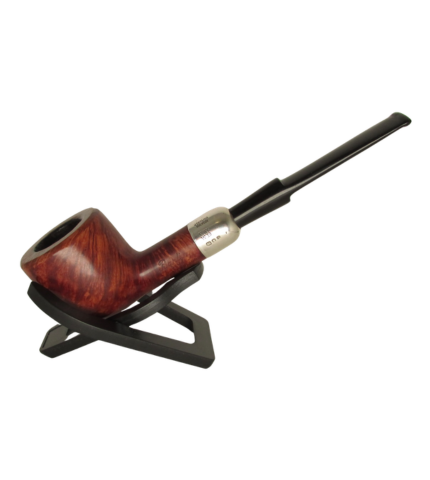
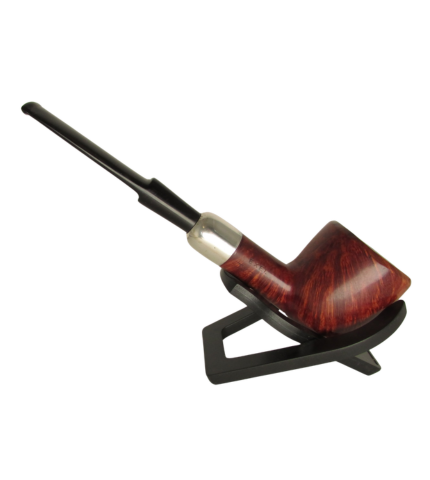
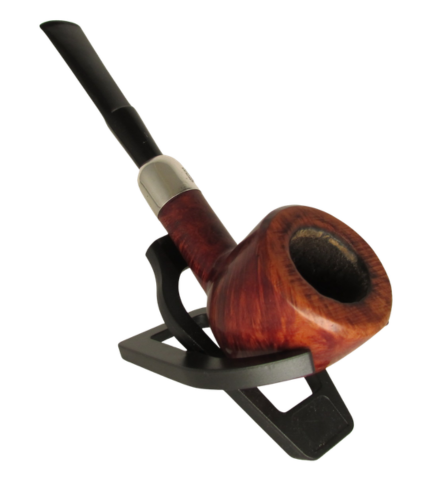
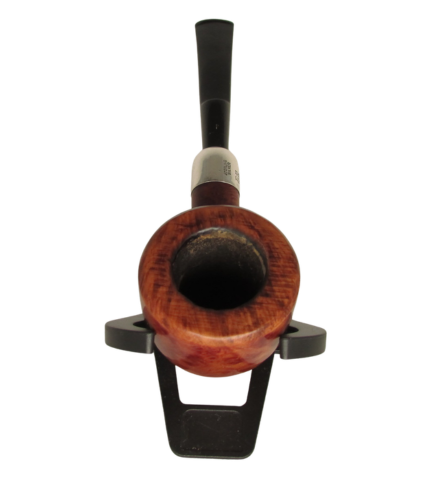
This pipe has an army mount, and there is a Sterling Silver cuff where the shank meets the stem. Hallmarks are present on the cuff. The pipe is stamped "Barling", "3107", "London England", "Exel" and "TVF"
The pipe you see is the pipe you get. This pipe came to us from a private collection, and where necessary, has been expertly restored by a local craftsman. This pipe was previously smoked but has been completely and professionally reconditioned and sanitized. Because it has been pre-owned, the price is drastically reduced compared to what this pipe would cost new (assuming that you could even find it). We stand behind these pipes; if you ever have an issue, return it to us for repair or refund.
Tobacco pipe stands used in the pictures are for photography purposes only and are not included.
| Bowl Height (Outside) | 1.59” / 40mm |
| Bowl Width (Outside) | 1.52” / 39mm |
| Pipe Length | 6” / 152mm |
| Chamber Depth | 1.26” / 32mm |
| Chamber Diameter | .81” / 21mm |
| Pipe Weight | 39g |
| Pipe Shape | Pot |
| Stem Shape | Straight |
| Filter | No |
| Shape Number | 3107 |
| Bowl Material | Briar |
| Stem Material | Acrylic |
| Finish | Smooth |
| Country | England |
About Barling Pipes
Barling tobacco pipes occupy a revered place in the history of pipe making, representing a blend of traditional English craftsmanship and enduring quality. Founded in London in the early 19th century, Barling began as a family-run silversmithing business before transitioning into pipe production. This heritage in fine metalwork would later influence the company’s attention to detail and commitment to precision.
By the late 1800s and into the early 20th century, Barling had established itself as one of the premier pipe makers in England. The firm gained particular acclaim for its use of high-quality briar, carefully sourced and expertly cured to ensure optimal smoking characteristics. Barling pipes became synonymous with excellent grain, durability, and a refined aesthetic that appealed to discerning smokers around the world.
One of the defining features of Barling pipes is their classic shaping. Rooted in traditional English forms such as the Billiard, Bulldog, and Dublin, Barling’s designs are often praised for their balance and proportional harmony. The bowls tend to be slightly more robust than some of their contemporaries, offering a comfortable hand feel and a satisfying smoking experience. Their finishing work—ranging from smooth, natural stains to richly textured sandblasts—demonstrates a consistent dedication to quality.
Collectors often distinguish between different eras of Barling production, particularly the pre-1960 “Family Era” pipes, which are widely regarded as the pinnacle of the brand’s output. During this period, pipes were still overseen by members of the Barling family, and many enthusiasts believe these examples exhibit superior craftsmanship and materials. Later pipes, produced after the company changed ownership, remain well-made but are generally viewed as less distinctive.
Another notable aspect of Barling pipes is their engineering. Known for precise drilling and well-fitted stems, these pipes typically provide an effortless draw and even burn. The use of high-quality vulcanite stems, often hand-cut, contributes to both comfort and longevity. These functional elements, combined with their elegant design, have cemented Barling’s reputation among pipe smokers.
Today, vintage Barling pipes are highly sought after on the estate market, appreciated not only for their smoking qualities but also for their historical significance. They serve as a testament to a time when pipe making was a deeply artisanal craft, guided by tradition and a commitment to excellence. For enthusiasts and collectors alike, Barling remains a name that evokes authenticity, heritage, and timeless appeal.


