




Description
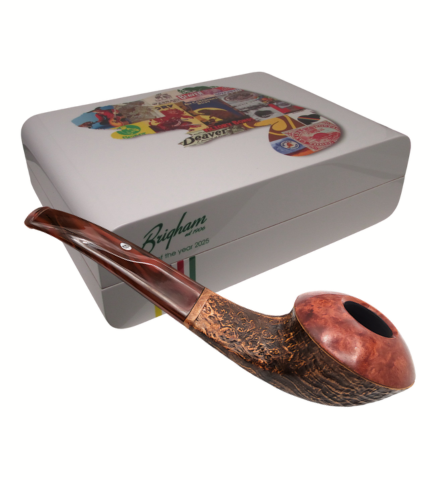
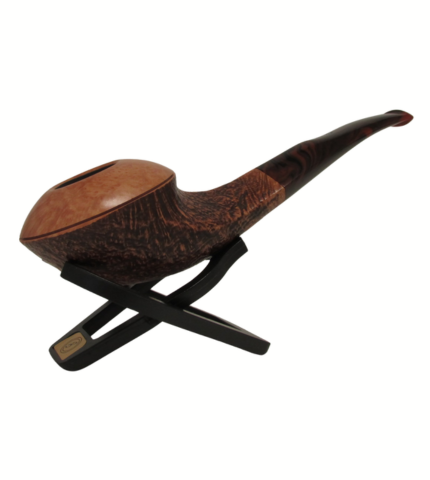
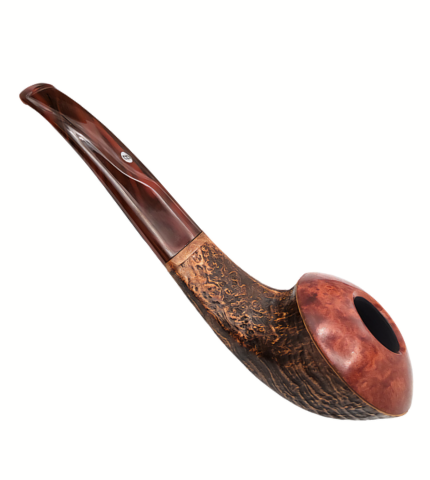
The wait is over! The highly anticipated pipe release of the year is now here: the Brigham 2025 Pipe of the Year. The Brigham POTY 2025 celebrates the 50th anniversary of the Beaver’s official recognition as a National Symbol of Canada.
The Beaver has been a fundamental piece of Canadian history and identity for hundreds of years. Beaver pelts were the backbone of the fur trade in the 17th and 18th centuries – trade that not only built the Canadian economy but forged travel routes and established settlement patterns that still exist to this day. More than 1,000 parks and communities in Canada are named for the Beaver.
The Beaver itself is industrious, resourceful, protective of its family, and quietly determined - traits many Canadians value in themselves. From Canada’s earliest days, the Beaver has been woven into the fabric of our folklore, artwork, pop culture, architecture, currency and marketing.
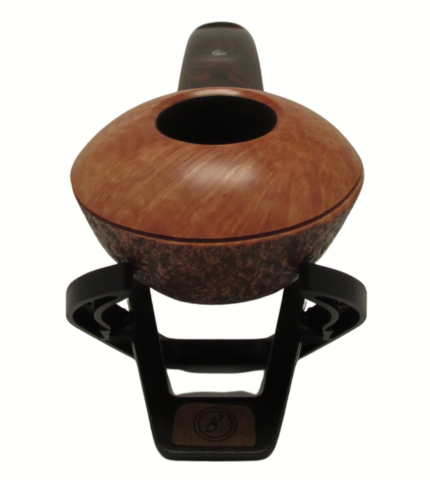
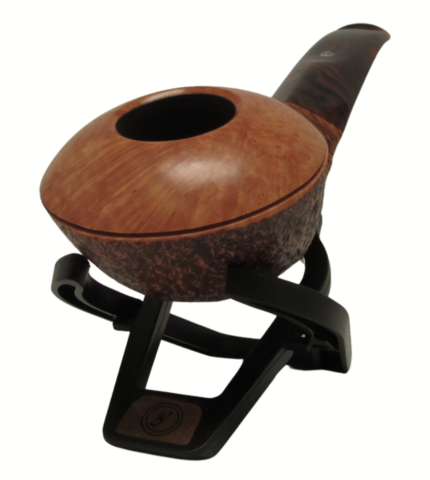
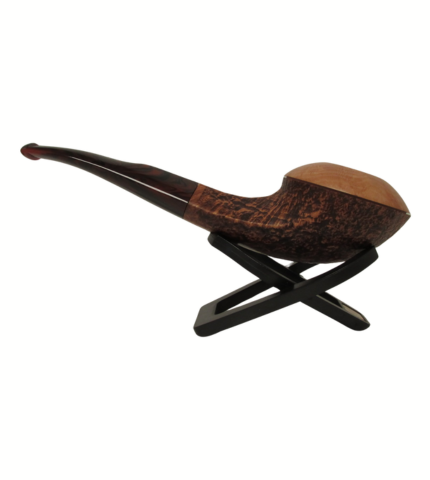
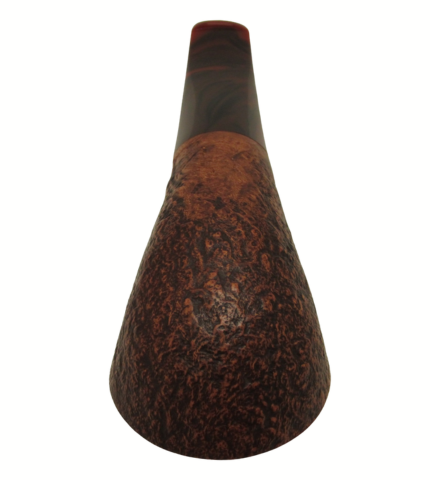
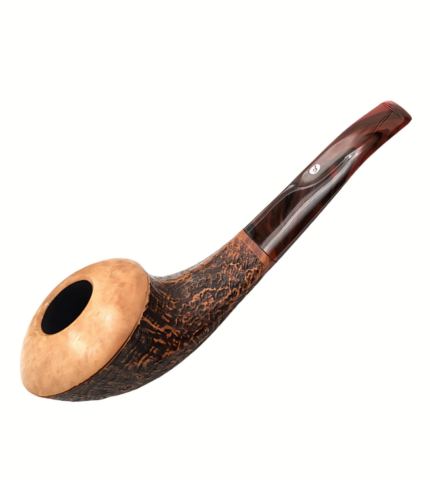
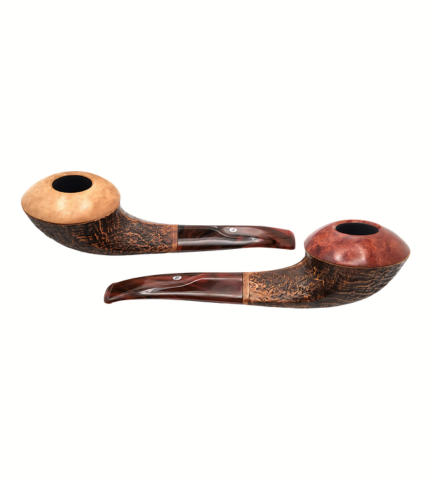
To design a pipe honouring the Beaver, Brigham took inspiration from its shape - a short, rounded bowl, dark brown finish, fur-like sandblast, and a flat, wide stem like the Beaver’s tail. Each of the 120 pipes was hand-made and sandblasted in France. Pipes #1 to #89 feature a smooth, natural-coloured top while pipes #90 to #120 have a dark red/orange top.
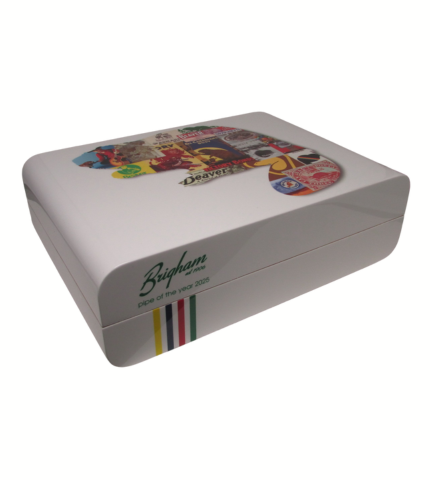
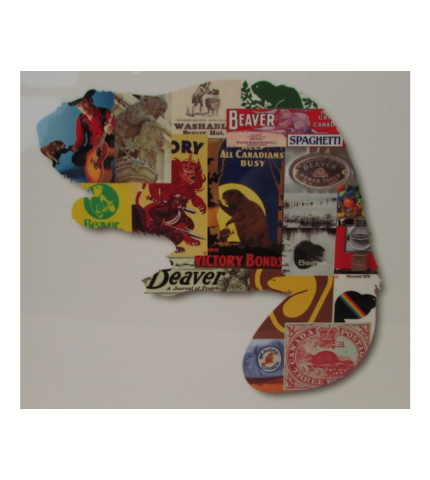
The box itself is rounded, an artful imagining of a snow-covered Beaver dam. On top is a collage featuring some nostalgic, iconic, and whimsical representations of the Beaver in Canadian culture and history. Below is a list of all the images that can be found in this collage.
- Stompin’ Tom Connors with Beaver, Macleans magazine 1972
- Sculpture by Cléophas Soucy on the Parliament Building’s center block, unveiled 1938
- Washable Beaver hat ad, early 1800s (referenced in Oliver Twist by Charles Dickens)
- Roots logo
- Beaver Spaghetti package (Master Baker Flour Mills, Vancouver)
- Beaver power tools logo circa 1946
- Beaver vending machine
- Montreal 1976 Olympics mascot “Amik”
- Three Pence Beaver - Canada’s first postage stamp 1851 designed by Sanford Fleming
- Beaver Scout hat
- Parks Canada logo, 1973 by Roderick Huggins
- Beaver, a Journal of Progress, first edition logo, Hudson’s Bay company 1920
- Victory Bonds poster, 1942
- Beaver Lumber logo
- “Keep Canadians Busy” 1918 Victory Bonds poster
- Hinterland Who’s Who, The Beaver, National Film Board episode intro opening frame 1963
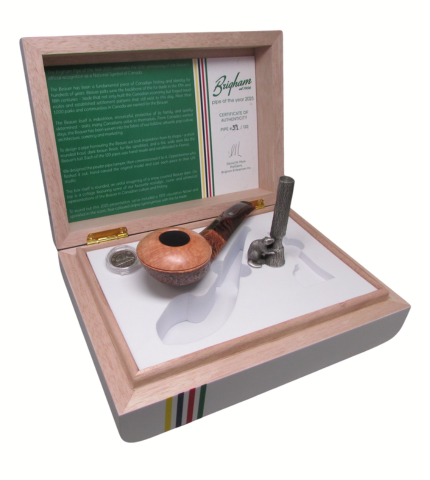
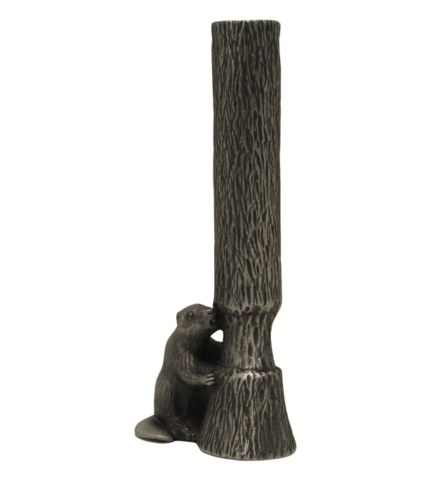
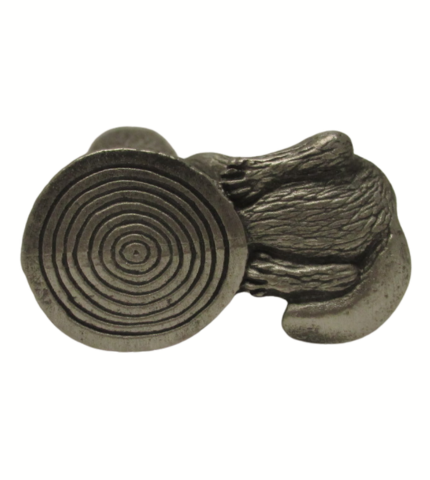
The team at Brigham designed the pewter pipe tamper, then commissioned artist A. Oppenheimer who fleshed it out, hand-carved the original model and cast each piece in their U.K. studio. To round out this 2025 presentation, Brigham included a 1975 circulation Nickel and sprinkled in the iconic four-coloured stripes synonymous with the fur trade.
Note: Tobacco pipe stands used in the pictures are for photography purposes only and are not included. Also, if you have a specific number you'd like we'll do our best to honour your request but can make no guarantees.
Pipe Dimensions:
| Bowl Height (Outside) | 1.65” / 42mm |
| Bowl Width (Outside) | 2.09” / 53mm |
| Pipe Length | 6.125” / 156mm |
| Chamber Depth | 1.30” / 33mm |
| Chamber Diameter | .80” / 20mm |
| Pipe Weight | 68g |
| Pipe Shape | Saucer |
| Stem Shape | Quarter Bent |
| Filter | Distillator |
| Shape Number | N/A |
| Bowl Material | Briar |
| Stem Material | Acrylic |
| Finish | Rusticated |
| Country | France |
Tamper Dimensions: 75g; 7.5cmx 3.1cm x 1.8cm
About Brigham Enterprises
Brigham tobacco pipes have a storied history rooted in Canadian craftsmanship. Founded in 1906 by Roy Brigham in Toronto, Canada, Brigham began as a small pipe repair business, later growing into a notable pipe manufacturer. Brigham's commitment to quality and innovation quickly distinguished the brand in the world of smoking pipes.
Brigham tobacco pipes are celebrated among pipe enthusiasts for their quality craftsmanship and innovative design. Established in Canada in the early 20th century, Brigham Pipes has built a reputation for producing durable and stylish pipes with a focus on enhancing the smoking experience. One of the key innovations that set Brigham pipes apart is the patented "Rock Maple Insert" system, developed in the 1930s. This system uses a small wooden insert made from Canadian rock maple, designed to reduce moisture and tar buildup in the pipe, resulting in a cooler, smoother smoking experience. This natural filtration method became a hallmark of Brigham pipes, appealing to smokers looking for a cleaner, more refined experience.
Through the years, Brigham expanded its line to offer pipes in various styles and finishes, consistently maintaining its reputation for high-quality craftsmanship. Though Brigham faced challenges and competition, it remained a celebrated brand among pipe enthusiasts. Today, Brigham pipes are valued not only for their performance but also as a piece of Canadian heritage, carrying over a century of tradition and innovation into the present.
Brigham pipes are crafted from high-quality briar wood, which is both heat-resistant and durable, allowing the pipe to age well and develop character over time. Each pipe is handmade, and the attention to detail is evident in the various styles and finishes, catering to different tastes, from classic to more contemporary designs. Their pipes are available in a wide range of shapes and sizes, appealing to both beginners and seasoned pipe smokers.
Today, Brigham pipes are valued not only for their functionality but also for their heritage and craftsmanship, representing a classic choice for those who appreciate tradition, quality, and an enhanced, smooth smoking experience.


